When a Pop Star Ships an App: Is Hand-Written Code Becoming a Lost Art?
Chinese pop star Tiger Hu, with zero programming background, vibe-coded a fan app that reached the App Store social chart. Interns now call manual coding 'the ancient craft.' But the 90% of engineering below the waterline — operations, security, reliability — makes experienced engineers more scarce, not less. A confession from a hand-coder of fifteen years.
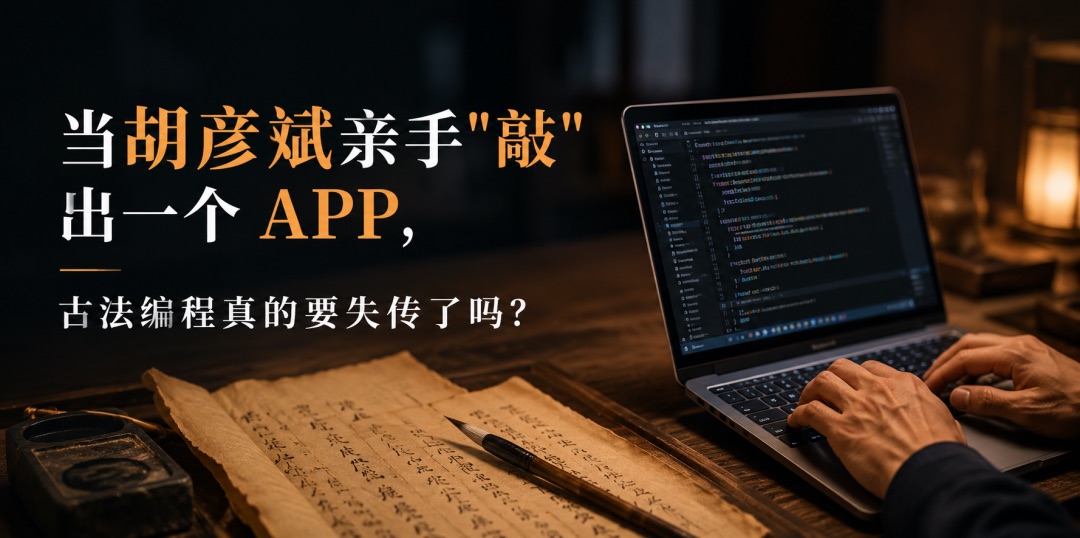
中文版 / Chinese Version: 当胡彦斌亲手”敲”出一个 APP:古法编程,真的要失传了吗?
A few days ago on Weibo, I saw a post from Tiger Hu (胡彦斌) — one of the most accomplished singer-songwriters in Chinese pop — announcing that he had built an app. Himself.
“Yanhuo launches today. It’s the first app I’ve ever built with my own hands. I learned vibe coding from scratch, assembling and polishing it bit by bit. The process was winding but unforgettable — like beating a game, and a little like making music: refine, refine again.”
I stared at that post for a long moment.
Understand: this is not an ordinary person, but not a technical one either. He debuted as a teenager, wrote a string of enduring hits, produces other artists, and runs a music school. My wife has been a fan for years; his songs are on permanent rotation in our home.
And this man — someone who had never touched programming — used AI coding tools to poke out a complete app, “Yanhuo” (彦火), line by line.
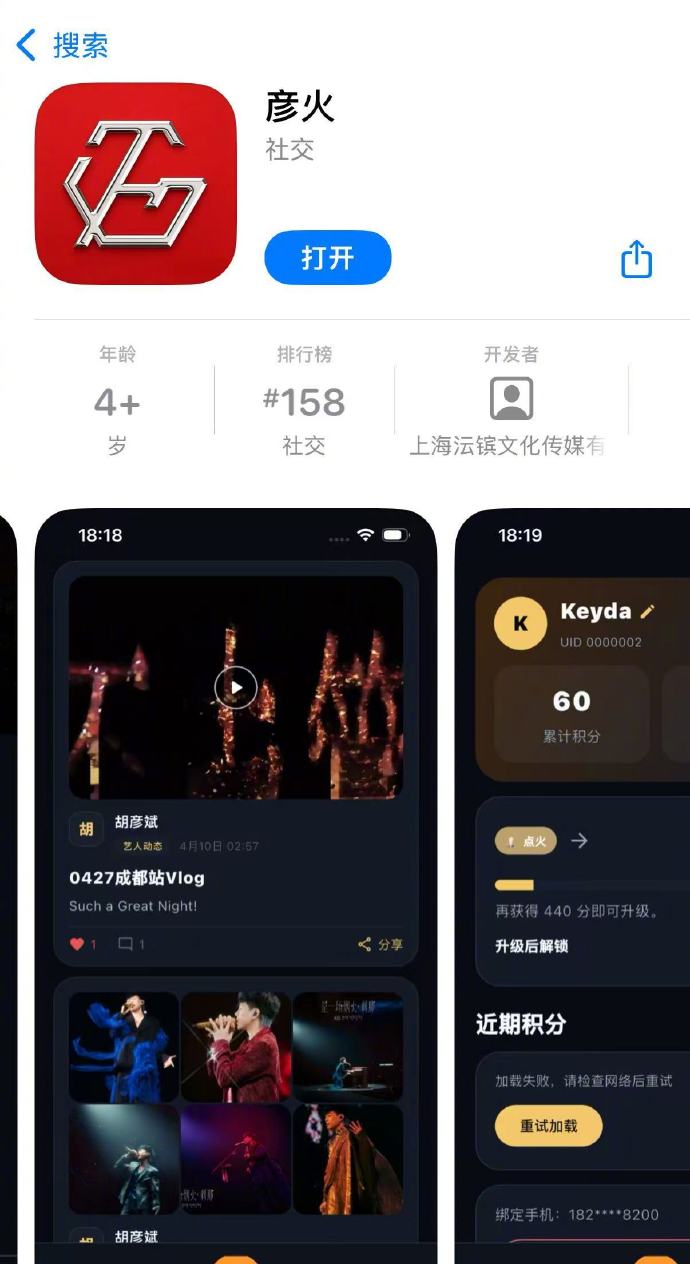
I downloaded it. Honestly? The completeness exceeded my expectations: a video vlog feed, an events calendar, a points system, fan community features. The interface is clean and restrained. This is not a toy demo — it’s a real product that climbed the App Store social chart.

A singer just demonstrated cross-domain execution, again.
Why a Singer Made Programmers Squirm
Professional engineers quickly audited the app and, sure enough, found real problems:
- API security gaps, with sensitive data insufficiently protected
- Missing validation in places, prone to exceptions
- An architecture that won’t hold up under heavy traffic
All fair hits. But I think fixating on the code flaws misses the point entirely.
The signal that should send a chill down your spine is this:
A person with zero background can now independently ship a complete product.
Two years ago this was fantasy. Today it happened to a pop singer.
The “Ancient Craft” Is Losing Its Apprentices
A few days ago I ran an AIDLC training (AI coding methodology + hands-on) at a client site. Two university interns attended.
I asked casually: “Do you still write code by hand?”
Their answer has stayed with me:
“The ancient craft? We never learned it. It’s all AI coding now.”
Savor that phrase — “ancient-craft programming” (古法编程).
To the newest generation of developers, writing code by hand is already an artisanal technique — like hand-grinding tofu, something you’d have to seek out and study deliberately.
The lineage of hand-coders is breaking. Not because the old masters retired — because the newcomers never intended to learn.
When the People Who Understand the Business Start Building
Tiger Hu is only the beginning.
You will see this more and more: people who understand the product and the business, building the software themselves.
Product managers no longer write a stack of PRDs and wait for sprint capacity — tonight’s idea is tomorrow’s product. Domain experts no longer argue requirements with engineering — they build the prototype, sometimes the finished thing, themselves.
What vibe coding breaks was never a technical barrier.
It breaks the wall between creativity and product.
A good idea used to mean recruiting, scheduling, negotiating, and acceptance testing — months, while the moment went cold. Now a good idea can ship in one all-nighter.
That is the genuinely seductive part.
But Hold On — 90% of the Iceberg Is Underwater
Time for the cold water.
Getting software built and launched completes about 10% of the job. That’s the tip of the iceberg everyone can see.
Below the waterline:
- Iteration: How are versions managed? How do features roll out gradually?
- Operations: Where does it deploy? How does it scale? When it crashes, how do you roll back?
- Security: Is the data compliant? How do you prevent injection and exfiltration?
- Reliability: Can it survive high concurrency? How do you upgrade the database without downtime?
These are the muscle memories a generation of hand-coders bought with a decade of stepped-on landmines and sleepless nights. AI helps here too — automated inspection, generated runbooks, vulnerability scanning, and it keeps improving. But the genuinely thorny cases, the judgment calls at critical moments, still mostly need experienced humans to backstop.
Which leads to the counterintuitive conclusion:
Precisely in the AI coding era, experienced “ancient-craft” engineers are in greater demand, not less.
The logic is plain: the number of people who can produce the visible 10% just exploded, so the volume of shipped software multiplies — and the underwater 90% of work scales right along with it. For now, that load lands mostly on engineers with accumulated experience. AI shares the burden; it can’t carry it all.
AI can write code. It cannot yet step on the landmines for you, make the judgment call, or hold the line at 3 a.m. when the system is going down.
Endgame: Does Software Become Disposable?
You want to ask: what happens eventually?
Specialized agents are already emerging — DevOps agents, security agents, database agents — biting off chunks of the underwater work.
The more radical thinkers propose disposable software: need a feature, have AI write it on the spot, discard it after use. Sounds extreme, but some agents already work exactly this way — generate code ad hoc, solve the problem, throw it away.
Fully automating the underwater 90% will take time. What it needs most is distilling the experience in the heads of this generation of hand-coders into reusable Skills and Agents.
Three years, maybe five. But the direction is no longer in question.
Closing: I’m an “Ancient-Craft” Programmer Too
Having talked about everyone else — I’m one of them. I’ve hand-typed code for over fifteen years.
I remember the night spent chasing a null pointer until dawn. The sweaty-palmed line-by-line review before a launch. The deep exhale when a bug that tortured me for days was finally pinned down. That code was typed one character at a time. It carried body heat.
So when a singer talked an app into existence, claiming I felt no loss would be a lie.
It’s the feeling of an old carpenter watching the assembly line arrive — the craft you took pride in becoming a footnote to an era.
But I also know the times never pause for anyone’s reluctance.
We stopped hand-copying scriptures long ago, yet the culture survived. We stopped drilling wood for fire, yet the flame endures. Hand-written code may genuinely fade away — but the fire of wanting to turn what’s in your head into something real will not go out.
It just burns differently now.
And what I can do is not stand on the shore keeping vigil for the old era — it’s to hand over these fifteen years of stepped-on mines, late nights, and accumulated judgment to the new one, piece by piece. Even if that means handing them, personally, to the AI that will eventually replace me.
Perhaps that is the fate of our generation of hand-coders:
to personally attend one era’s curtain call, and personally push open the door to the next.
Not a bad deal, all things considered.
To everyone still typing code by hand — we made it here together.
References
- Vibe Coding — Wikipedia
- Claude Code — Anthropic