Blog
Deep technical articles and analysis.

0-1. Messi's World Cup Is Over. No Models This Time — Just a Proper Goodbye
Argentina 0-1 Spain: Ferran Torres' 106th-minute goal ended Messi's sixth and final World Cup. Congratulations to Spain — and a farewell to Leo: the tears after the Egypt comeback, the letter a 15-year-old Enzo Fernández wrote him in 2016, six tournaments across 20 years, and why he was always a human being, never a god.
Don't Just Buy Your Engineers AI Tools: The Complete Playbook for Becoming an AI-Native Company
Why companies that bought every AI coding tool still aren't shipping faster — and the four-layer playbook that actually works: Loop Engineering for individuals, Harness Engineering for teams, AI-DLC 2.0 and AI-PLC for process, and a full organizational redesign of roles, KPIs, policies, and middle management.
The Mysterious 400 in Claude Multi-Turn Chats: Debugging a Thinking Signature Corruption
A customer's Claude extended-thinking conversations kept failing with 400 Invalid signature — but only on some gateway channels. A full postmortem: what the signature mechanism is, how a proxy's JSON re-serialization silently corrupts base64, five controlled experiments that pinned it down, and a fix checklist for every LLM gateway developer.
Inside Kimi K3's Two Architectural Pillars: KDA and AttnRes, Explained From Zero
Beginner-friendly, analogy-driven walkthrough: KDA turns attention's 'open-book exam' into 'one page of smart notes' — 75% less KV-cache memory, 6.3x faster decoding at 1M tokens. AttnRes turns the residual stream's 'running ledger' into 'a notebook with an index' — 25% better training efficiency at under 2% overhead. By the end you'll know exactly how 2.8T parameters stay standing.
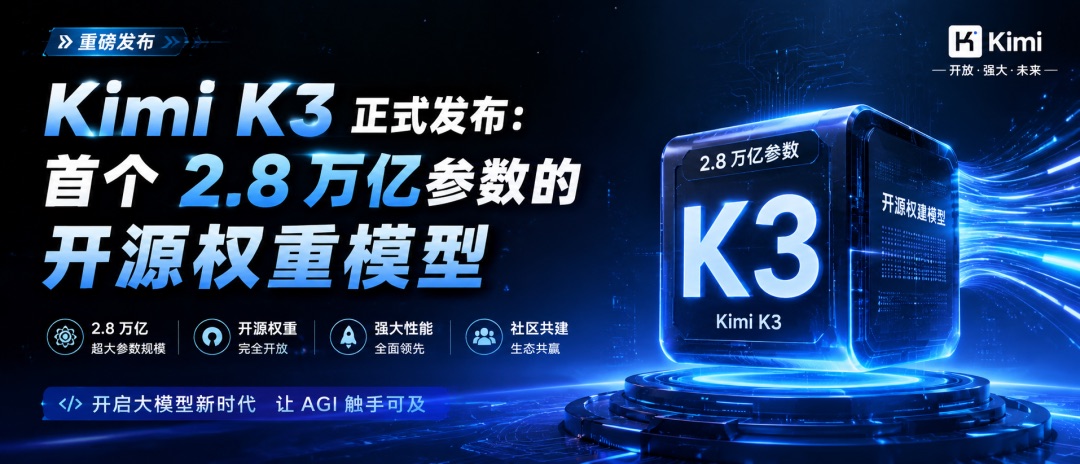
Kimi K3 Is Here: 2.8 Trillion Parameters, Fully Open Source — This Time It's Different
Moonshot AI releases Kimi K3: 2.8 trillion parameters, the world's first open-source 3T-class model, 1M-token context, and native multimodality. A deep dive into the KDA and AttnRes architecture innovations, its #4 global ranking on Artificial Analysis, pricing that matches Claude Sonnet 5, and the four long-term ways an open frontier model reshapes the industry.

On the Eve of the Final, I Had fable 5 Run Another Million Simulations: Messi Kicked More Than Half the Gap Away
All six predictions from the last article hit: Spain 2-0 France, Argentina 2-1 England, and the 41.8%-probability Spain–Argentina final came true. Before the final I fed the semifinal data back to fable 5 and re-ran a million simulations: Spain's win probability dropped from 54.1% to 51.8%, Argentina's rose from 45.9% to 48.2% — Messi, leading the tournament scoring chart, took back the points the model had docked for his age. Plus the story of a photo taken 19 years ago: Messi and baby Yamal.

I'm a Messi Fan, But I Asked the Strongest Model Ever — fable 5 — to Predict the World Cup. The Answer Hurt.
The 2026 World Cup semifinals are set, so I had Claude Fable 5 build a prediction model — Elo ratings, age-curve and tournament-experience adjustments, a dedicated penalty-shootout submodel — and run 1,000,000 Monte Carlo simulations. The result is the 'Argentina Paradox': Argentina has the highest probability of reaching the final (66.5%), yet Spain is the most likely champion (37.5%). A sensitivity analysis shows Messi's form is literally the dividing line.
Slow Down in the AI Wave: A Reality Check for Employees and Bosses
At least half of today's AI anxiety is manufactured by marketing. First-hand data from PwC, MIT, METR, and DX on the 2026 AI reality: 56% of CEOs report zero ROI, 95% of enterprise GenAI pilots fail, and AI coding delivers ~10% gains, not 10x. Five grounded rules for workers, five for leaders.
Claude Code vs Gemini CLI vs Aider: Which Terminal Coding Agent Should You Use in 2026?
A working comparison of the three major terminal coding agents as of mid-2026: Claude Code's autonomous agent loop, Gemini CLI's open-source free tier (and its Antigravity turbulence), and Aider's git-native pair programming. Comparison matrix, honest strengths and weaknesses, and a decision framework.
When a Pop Star Ships an App: Is Hand-Written Code Becoming a Lost Art?
Chinese pop star Tiger Hu, with zero programming background, vibe-coded a fan app that reached the App Store social chart. Interns now call manual coding 'the ancient craft.' But the 90% of engineering below the waterline — operations, security, reliability — makes experienced engineers more scarce, not less. A confession from a hand-coder of fifteen years.
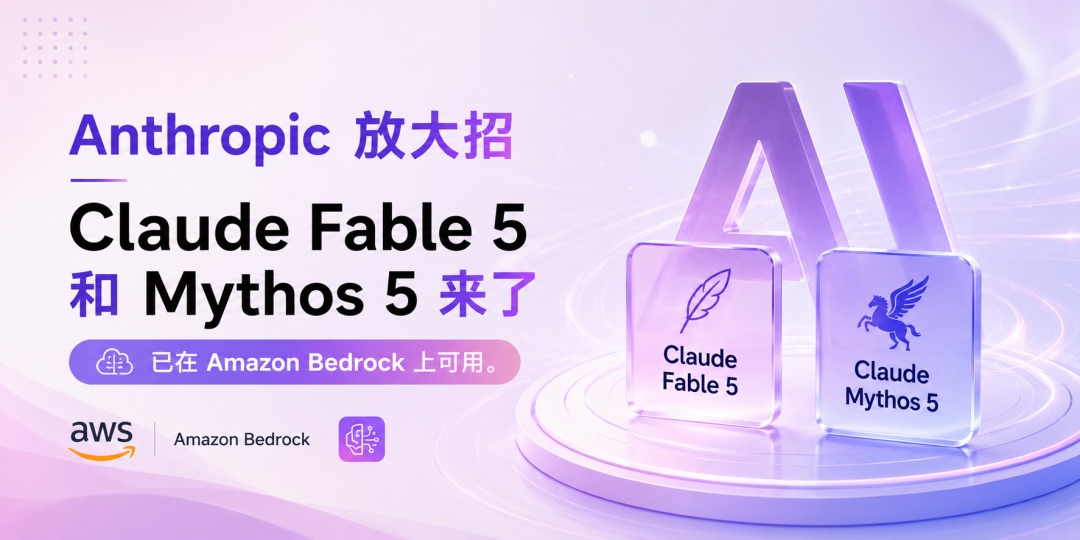
Anthropic Goes Big: Claude Fable 5 and Mythos 5 Are Here
On June 9, 2026, Anthropic shipped Claude Fable 5 and Mythos 5 simultaneously: the same underlying model, differing only in guardrails. Fable 5 is SOTA on nearly every benchmark, with the lead growing on longer tasks (Stripe migrated a 50-million-line codebase in one day). Priced at $10/$50 — less than half of Mythos Preview — and already live on Amazon Bedrock. Plus: why did the hidden Mythos suddenly come out of the vault?
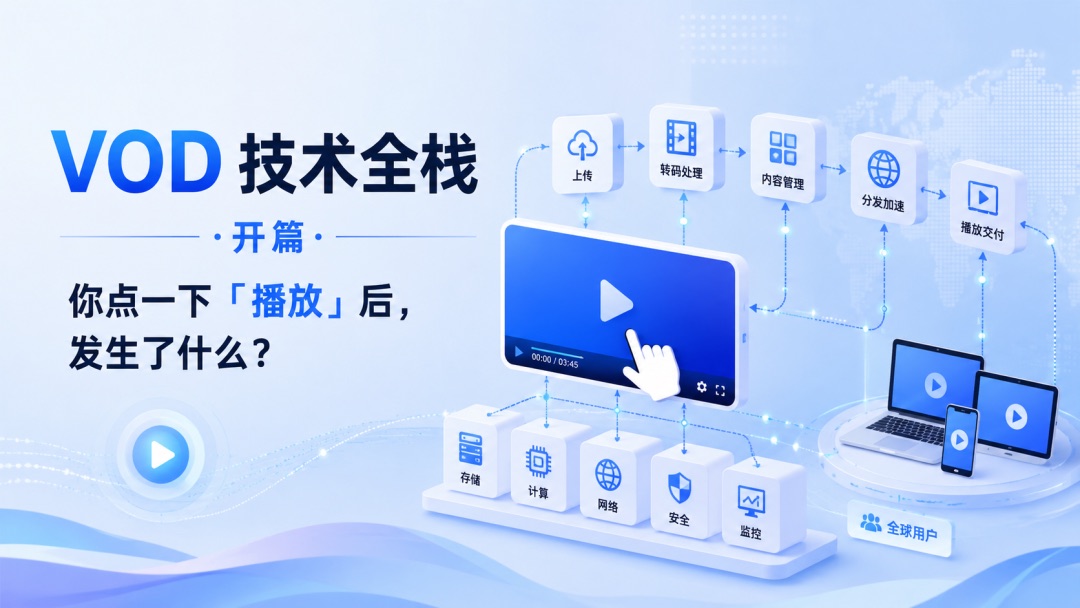
VOD Deep Dive Part 1: Video Fundamentals — What Is a Video, Really?
The first installment of our 12-part VOD streaming series. Learn what video actually is at the byte level — pixels, resolution, frame rates, bitrate, I/P/B frames, GOP, color spaces, and HDR.
VOD Deep Dive Part 10: QoE Metrics — How to Measure What Users Actually Feel
QoE vs QoS, six core metrics (VST, RBR, VSF, EBVS, VPF, Avg Bitrate), data pipelines, multi-dimensional drill-down, troubleshooting cases, and when to buy vs build.
VOD Deep Dive Part 11: End-to-End Workflow — From Upload to Playback
The complete 10-step VOD production pipeline: upload, content moderation, probe, transcode, package, publish, CDN pre-warm, orchestration with Step Functions and Temporal, disaster recovery.
VOD Deep Dive Part 12: Building VOD on AWS — Services, Architecture, and Costs
Complete AWS VOD reference: MediaConvert, MediaPackage, CloudFront, S3, Step Functions, SPEKE DRM integration, Terraform IaC, real cost breakdowns, common pitfalls, and a production roadmap.
VOD Deep Dive Part 2: Video Codecs — Why a 4K Movie Fits in 5 GB
How video compression works, why H.264 still dominates, when to choose H.265 or AV1, per-title encoding, VMAF quality metrics, and hands-on ffmpeg examples.
VOD Deep Dive Part 3: Audio Fundamentals — Making Sound Small
How digital audio works: sampling rates, bit depth, channels, AAC vs Opus vs Dolby Atmos, multi-language tracks, loudness normalization, and practical ffmpeg recipes.
VOD Deep Dive Part 4: Container Formats — .mp4 Is Not a Codec
Containers vs codecs, MP4 internals (Box structure), the faststart trap, fragmented MP4, CMAF for unified HLS+DASH, segment length trade-offs, and subtitle formats.
VOD Deep Dive Part 5: Streaming Protocols — How HLS and DASH Actually Work
Why progressive download fails, how HLS two-level manifests and DASH MPD work, CMAF dual-manifest best practices, LL-HLS for low latency, and when to consider WebRTC.
VOD Deep Dive Part 6: Adaptive Bitrate — How Players Auto-Switch Quality
How ABR works under the hood: throughput-based, buffer-based (BBA), BOLA, MPC, and Pensieve algorithms. Plus practical engineering advice for bitrate ladders and short-form video.
VOD Deep Dive Part 7: CDN Distribution — Why It's Fast Everywhere
CDN architecture (Edge/Shield/Origin), caching strategies, request collapsing, signed URLs, pre-warming, JIT vs pre-packaging, multi-CDN strategies, HTTP/3, and cost estimation.
VOD Deep Dive Part 8: DRM Content Protection — Why Netflix Can't Be Screen-Recorded
Widevine, FairPlay, PlayReady explained. CENC/CBCS unified encryption, license flow, L1/L2/L3 security levels, HDCP, SPEKE integration, and lightweight protection for short-form video.
VOD Deep Dive Part 9: Video Players — From Manifest to First Frame
What happens inside a video player: Web (MSE/EME), iOS (AVPlayer), Android (ExoPlayer/Media3), TTFF optimization, buffering strategies, lip sync, and when to build vs buy.

How Do I Explain "Agent" to My Wife?
From 'the Lark bot can't do math' to 'raising your own AI lobster' — an AI-agent explainer for normal humans. Thirteen burning questions covering LLMs, tokens, Tools, MCP, RAG, Skills, Memory, Multi-Agent systems, and 2026 model prices. The AI isn't dumb — it just hasn't been raised properly yet.
Subtitle Position Detection with OpenCV and Amazon Nova
A hybrid CV + LLM pipeline for automatic subtitle detection — 6 iterations to reach 83% accuracy on multilingual video.
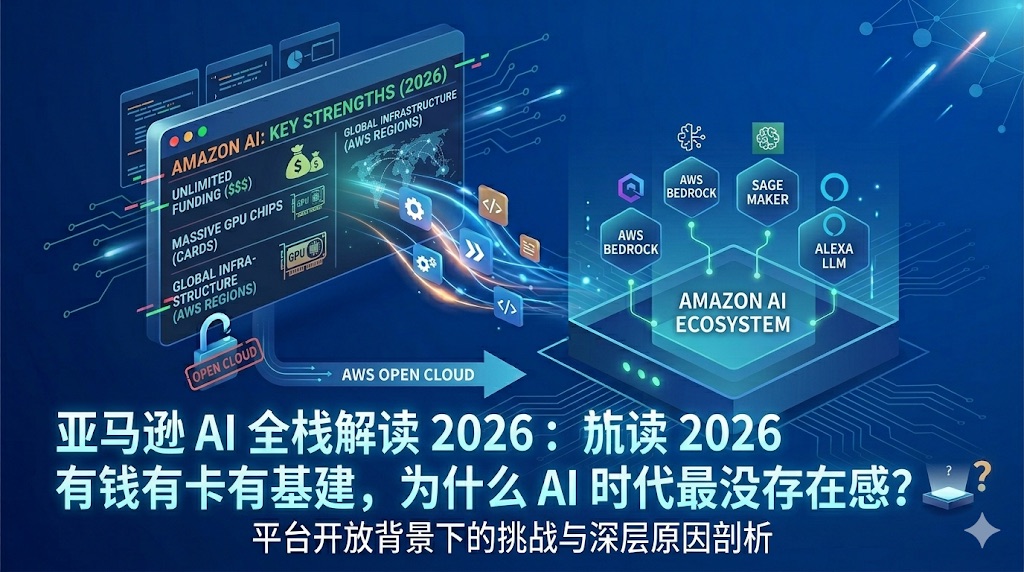
Amazon AI Strategy 2026: Why the Biggest Player Is the Least Visible
Custom chips, global infrastructure, massive investment — yet Amazon is invisible in the AI race. Here's what's really going on.
Claude Code vs OpenClaw: 510K vs 530K Lines Source Code Showdown
After Claude Code's source leak exposed 512K lines of TypeScript, we finally get a true apples-to-apples comparison with OpenClaw — architecture, agent definitions, security, and design philosophy.
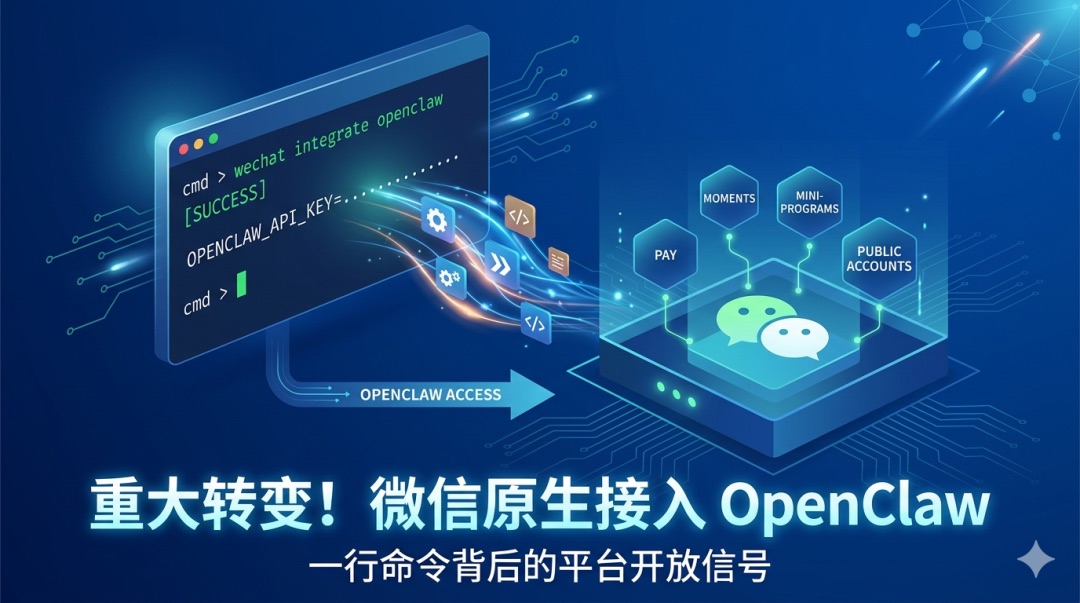
WeChat x OpenClaw: Platform Strategy in the AI Agent Era
WeChat's native OpenClaw integration signals a major shift. Why the world's largest messaging app opening up to AI agents matters.
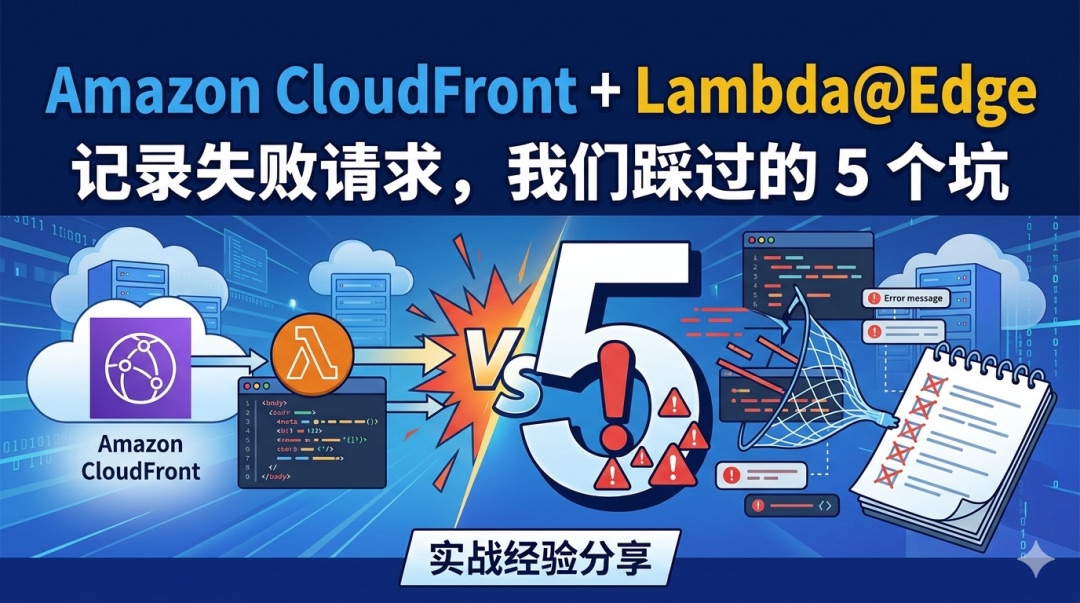
5 Pitfalls of Logging Failed Requests with CloudFront + Lambda@Edge
We built a dual Lambda@Edge setup for full request logging on CloudFront. Here are the 5 things that went wrong.
How AI Coding Agents Actually Work: A Source Code Deep Dive
We traced the source code of Amazon Q CLI and Claude Code to understand how AI coding agents really work under the hood.
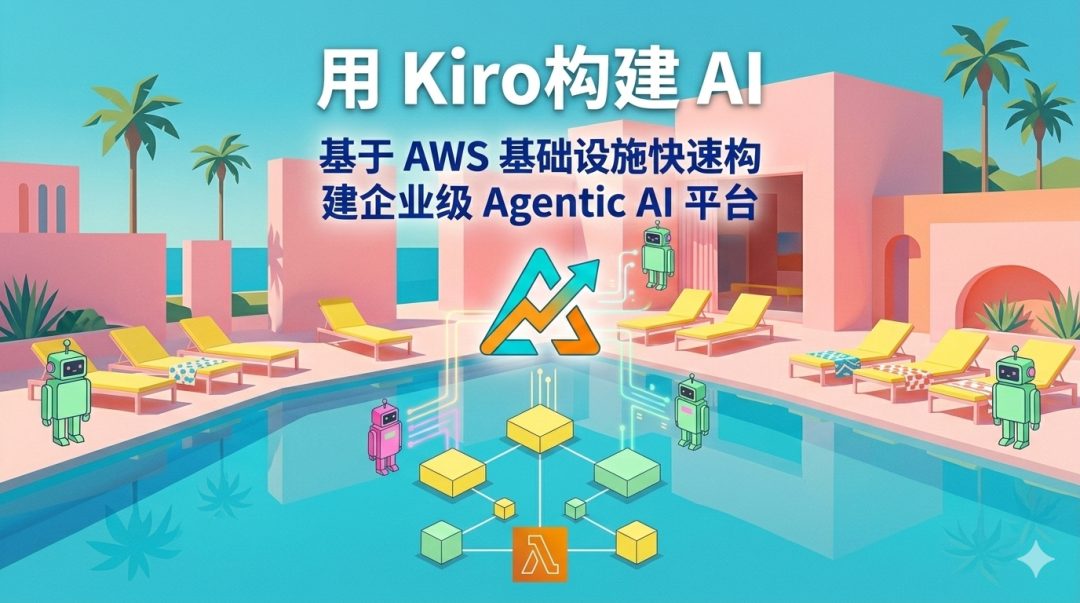
Building an Enterprise Agentic AI Platform with Kiro and AWS
We built a full AI agent platform in one week using Kiro IDE — zero hand-written code. Here's exactly how.
OpenClaw vs Claude Code: Architecture and Strategy Compared
Two AI agent products, two radically different philosophies. A deep comparison of architecture, adoption, and what's next.
Building Real-Time AI Audio-Video with Amazon Nova
Build a low-latency multimodal AI assistant with Amazon Nova, Transcribe, Polly, and the open-source TEN framework.
Claude Code vs Cursor vs Amazon Q: One Year Honest Review
After a year of daily AI-assisted coding — what actually works, what doesn't, and which tool wins for what.
Amazon QuickSuite: Natural Language Data Analysis Guide
Connect databases, build dashboards, and query data in plain English with Amazon QuickSuite — step by step.
Big Data on AWS Deep Dive (Part 10): Full Architecture Blueprint and Cost Breakdown
The complete end-to-end architecture for a social app's data warehouse and recommendation system on AWS — every service mapped, with real monthly cost estimates and optimization strategies.
Big Data on AWS Deep Dive (Part 9): SageMaker and the ML Platform — From Training to Production
A complete tour of SageMaker AI: Studio notebooks, Feature Store, Training Jobs, real-time Endpoints, Model Monitor, and how it all fits into the recommendation system MLOps workflow.
Big Data on AWS Deep Dive (Part 8): Online Feature Stores — DynamoDB, ElastiCache, and OpenSearch k-NN
How recommendation systems serve features at inference time: DynamoDB for user features, ElastiCache for hot caching, OpenSearch k-NN for vector recall, and Neptune for graph retrieval.
Big Data on AWS Deep Dive (Part 7): Recommendation System Fundamentals — Funnel, Two-Tower, and PIT
Understand the recommendation system funnel (recall → pre-rank → rank → re-rank), two-tower retrieval architecture, and why Point-in-Time correctness matters for training samples.
Big Data on AWS Deep Dive (Part 6): End-to-End Data Pipeline — From Source to Feature Store
Connect all the dots: trace a click event from client SDK through API Gateway, MSK, Firehose, S3, warehouse layers (ODS→DWD→DWS→ADS), to DynamoDB for real-time serving.
Big Data on AWS Deep Dive (Part 5): EMR, Glue ETL, Flink, and Pipeline Orchestration
Compare EMR Serverless, Glue ETL, Managed Flink, and choose the right compute engine. Then orchestrate data pipelines with MWAA (Airflow) and Step Functions.
Big Data on AWS Deep Dive (Part 4): Glue Catalog, Athena, and Lake Formation
How AWS Glue Data Catalog acts as the central directory for your data lake, and how Athena queries Parquet and Iceberg tables on S3 with serverless SQL.
Big Data on AWS Deep Dive (Part 3): Data Ingestion — DMS, Zero-ETL, Firehose, and MSK
Four data sources, four ingestion pipelines — learn CDC with DMS, Aurora Zero-ETL, Kafka on MSK, and Firehose micro-batching to land data into your S3 data lake.
Big Data on AWS Deep Dive (Part 2): S3, Parquet, and Apache Iceberg Explained
Master the storage foundation of modern data lakes — S3 object storage, Parquet columnar format, and how Iceberg adds ACID transactions to files on S3.
Big Data on AWS Deep Dive (Part 1): Data Lakes, Warehouses, and the Lakehouse Revolution
Understand the core big data concepts — data lake vs. data warehouse vs. lakehouse, OLTP vs. OLAP, and why modern analytics architectures converge on S3.
How to Build AI Agents for Ad Creative Generation
Automate ad copywriting, image, and video production with Strands Agents and Amazon Bedrock. A practical, code-first guide.
How to Build a RAG System with LangChain and Elasticsearch
A hands-on guide to building Retrieval Augmented Generation — from vector embeddings to context-enhanced LLM answers.
How to Build an AI Video Course Generator with Python
Turn PowerPoint slides into narrated video courses using LLMs, text-to-speech, and FFmpeg — fully automated.
How to Design a Full-Site Search Engine with Elasticsearch
Multi-source indexing, CDC sync, permission-aware search, hot keywords, and typeahead — a complete Elasticsearch architecture guide.
Building a Knowledge Base Search Engine with FSCrawler and Elasticsearch
Index PDFs, Word docs, and scanned files into Elasticsearch with FSCrawler. Covers OCR, custom mappings, and production setup.
Adding a Unique Index to a 15-Million-Row MySQL Table: A Production War Story
We added a unique index to a 15M-row live table and caused an outage. Here's what went wrong and the right way to do it.
DNS Deep Dive: From First Principles to Kubernetes
Understand DNS from dig traces to CoreDNS in Kubernetes. A practitioner's guide to debugging DNS in containers.
Building a Distributed Job Scheduler in Go
Design and ship a production task scheduler with Go, Machinery, Redis, and cron. Covers distributed locking and retry strategies.
How to Build API Monitoring with Grafana and Elasticsearch
Set up production API monitoring from scratch — Elasticsearch data source, Lucene queries, Grafana panels, and alerting rules.